

An airline can be months away from carrying public passengers and still need to look credible today.
That was Airsafa’s position in August 2025. Its team was preparing for regulatory approvals, recruiting aviation professionals, speaking with airport operators, investors and manufacturers, and building public interest through social media. Those conversations were already happening. What Airsafa did not have was a website people could visit afterward.
The request to Sparkable was direct: design and launch Airsafa’s aviation website, connect the domain and get it live in two weeks.
We did. Then we stayed.
Airsafa aviation website project at a glance
| Question | Answer |
|---|---|
| Who was the client? | Air Safa India Pvt Ltd, known publicly as Airsafa |
| What did Airsafa need? | A credible public website while the company prepared for airline approvals in India and continued its leasing and charter work connected to Singapore |
| What did Sparkable deliver? | Website strategy, UI and UX design, frontend development, launch and domain connection |
| How long did the initial delivery take? | Two weeks |
| What continued after launch? | Hosting, maintenance, content, analytics, reporting and technical consultation |
| Who did the work? | Three people across UI and UX, frontend development, project management and review |
| Where is the public website? | airsafa.in |
| What is the evidence boundary? | The site represented a company preparing to fly. We do not present planned routes, aircraft or services as completed airline operations. |
Airsafa had attention, but nowhere to send it
Airsafa was not starting from zero. The wider business included aircraft leasing and charter work connected to its Singapore operation. In October 2020, Aviation News Online reported that Air Safa had ordered an Airbus H125 helicopter for lease to Indian operators. By 2025, the company was also preparing an airline proposition for India.
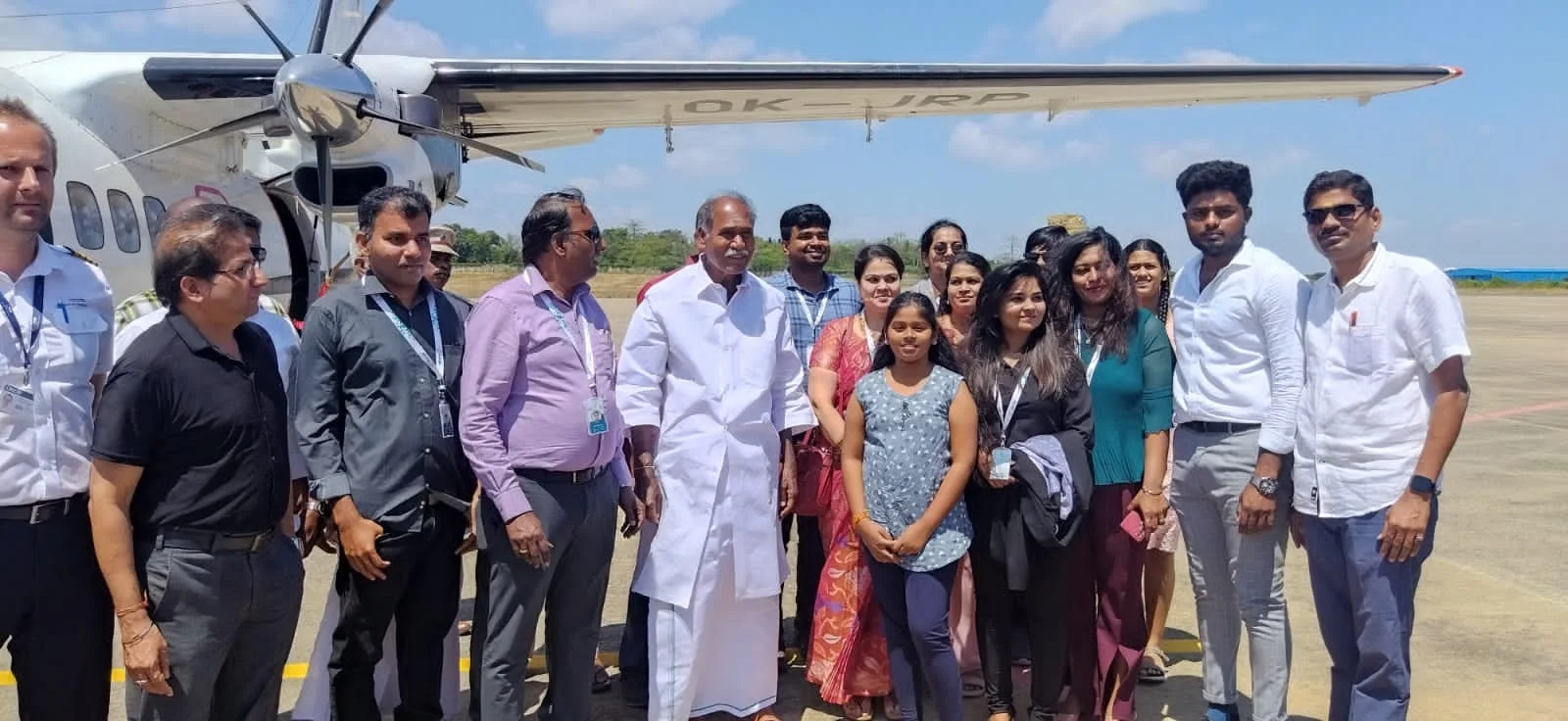
Its public activity was ahead of its website. The marketing team was active on LinkedIn and other social channels. Recruitment was bringing executives, pilots and other aviation professionals into the conversation. The leadership team was meeting people whose decisions could shape the business.
But a social profile is not a complete source of truth. A partner preparing for a meeting needs a clear account of the company. A journalist needs facts and context they can revisit. A candidate needs to understand the people, direction and opportunities behind a recruitment post. An investor or airport operator needs an enterprise website that can carry more context than a sequence of updates.
The website therefore had a job before it had traffic. It needed to carry confidence from an offline conversation into the next decision.
A clear brief with a difficult tension inside it
The client did not want a conventional airline website. The direction had to feel modern, support both dark and light themes, and remain connected to Airsafa’s own identity.
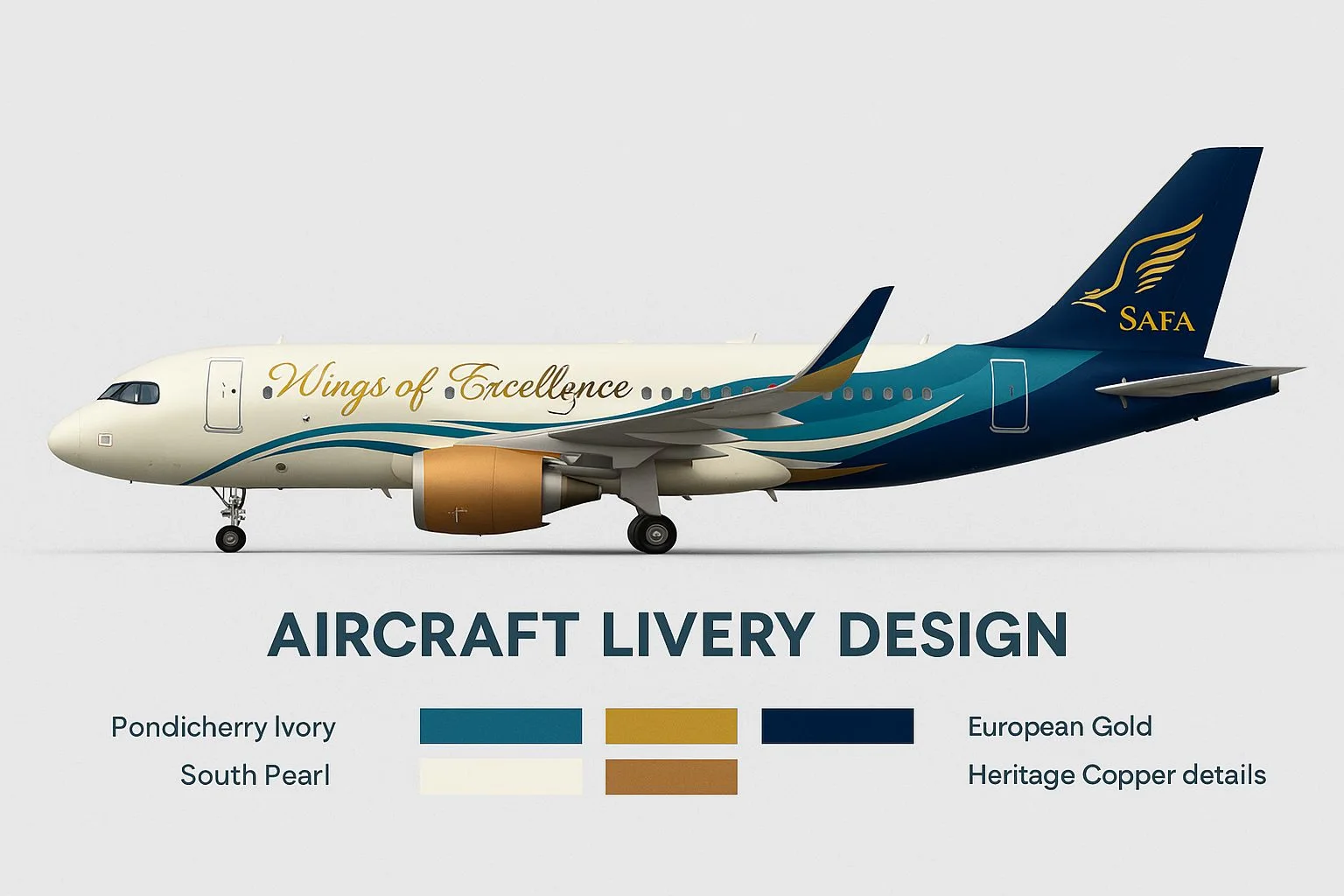
That identity came with useful material. The executive summary described the company’s position and the European influence behind parts of its planned cabin experience. The marketing team had mockups, photographs and aircraft concepts. The logo and livery work supplied the main colour cues: teal, navy, ivory, gold and copper.
Some source documents were confidential. That was normal for a company moving through regulatory preparation. Airsafa’s team had a clear sense of what could be made public and what needed to stay inside the business. We did not need the website to reveal everything. We needed it to organise the public-safe story well.
The tension was easy to state and hard to solve. Airsafa needed to communicate ambition without sounding as if approvals and public flights were already complete.
That is why the homepage still says “Flying soon.” It is a small line, but it establishes the boundary for everything around it.
How do you build trust before an airline is approved to fly?
We separated what Airsafa had already built, what its team was preparing and what still depended on regulatory approval. The website showed real people, existing aviation work, regional intent and ongoing preparation. Language such as “Flying soon” stopped that ambition from reading as a claim that public airline operations had already begun.
The globe made the strategy visible
We showed the client several opening ideas. The globe was the one they wanted to keep.
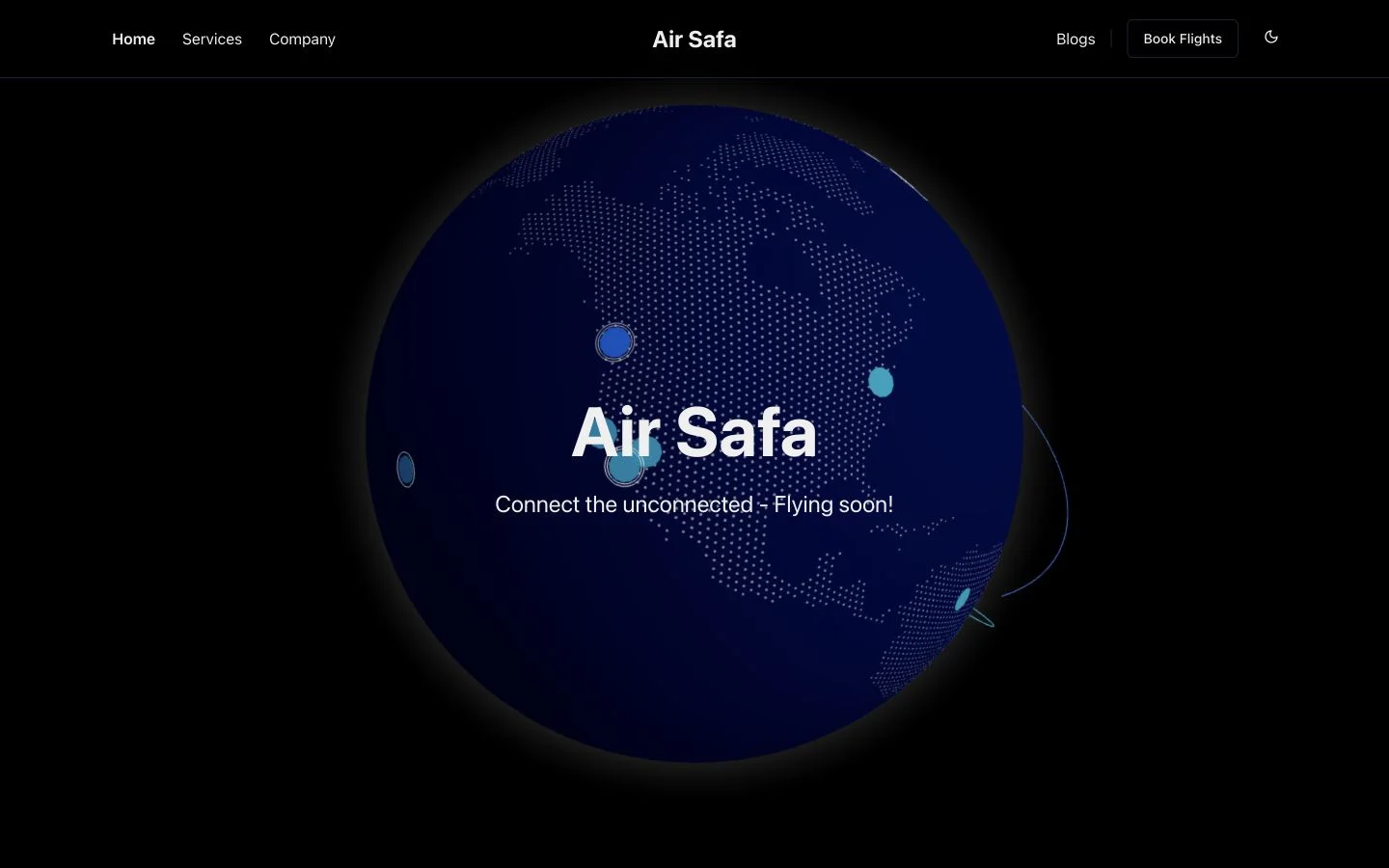
It translated “connect the unconnected” into motion. Routes arc across a dotted world, small points pulse into view, and the Airsafa name stays fixed at the centre. The idea carried a sense of reach without presenting a speculative timetable or pretending that a planned network was already operating.
The visual was also the hardest part of the first release.
The dark version came together naturally. Navy, blue and teal gave the globe depth, while the moving arcs remained visible against black. The light theme was less forgiving. A pale globe could lose its land pattern, route lines or atmosphere. Darkening it too much made the page feel heavy. The team had to tune globe colour, polygon contrast, light sources, atmosphere and route colours as one system.
Mobile created a second problem. The globe could not simply shrink. Its important features had to remain visible behind the headline while the header collapsed into a compact menu. The composition needed to feel intentional at 390 pixels, not like a desktop animation viewed through a narrow window.
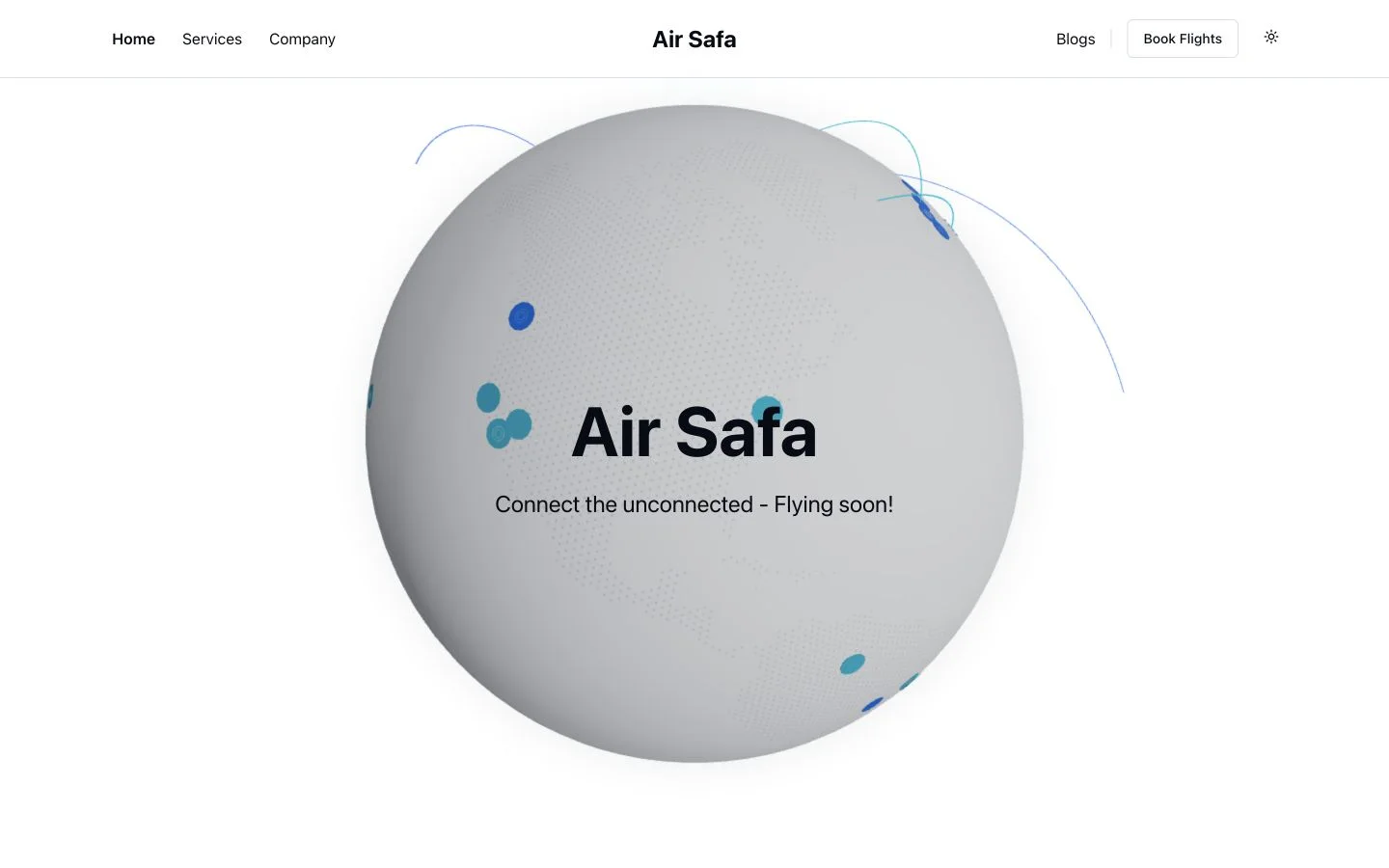
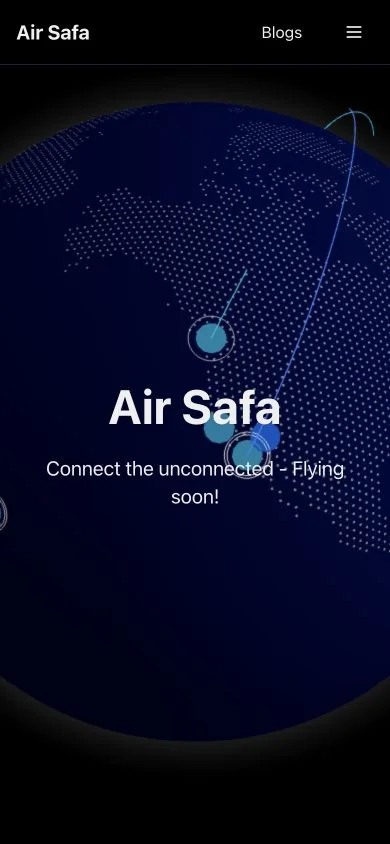
The implementation used a client-rendered Three.js globe inside a Next.js interface. Theme changes forced a controlled globe refresh, while responsive layouts changed the surrounding navigation and content rather than scaling every desktop element down.
The technical choice mattered because it served a communication idea. The globe was not decoration added after the page was designed. It was the clearest expression of Airsafa’s intended role.
Three people, one compressed feedback loop
The Sparkable team had three people. One focused on UI and UX direction, including Figma work. One handled frontend development. The third managed the project, reviewed the work, coordinated with the client and stepped into fixes where needed.
The schedule did not allow for long discovery workshops followed by a long silent build. We used a tighter rhythm.
When a page had enough confirmed information, we built it. When something was missing, we used a clear placeholder and asked a focused question. When the client supplied photographs, revised aircraft plans or team details, we worked them into the next pass. Airsafa’s marketing team could respond directly because they already understood the public story and had many of the required assets.
This kept meetings short. It did not remove communication. It made each exchange specific.
The client later described that rhythm in a testimonial:
Working with Sparkable was a pleasure. From the start they were very professional and the pace was incredible. In just two weeks they were able to complete our project and connect the domain. They grasped our theme and requirements with minimal conversations and were extremely mindful of our team’s time.
Murugaperumal K, Managing Director, Air Safa India Pvt Ltd. Lightly edited for grammar and clarity.
The first release was not the end of the work
A two-week launch is useful only if the team can see what still needs attention.
On August 15, 2025, we turned a detailed review into an 11-page revision brief for the implementation team. It was candid. Some aviation terms were wrong. Calls to action used inconsistent treatments. Cards did not always match their purpose. Several images loaded too slowly. Desktop compositions needed clearer mobile stacking. Theme behaviour varied across pages. The client wanted more attention on South India, including its temples, tourist destinations and cultural context.
The document also separated client requests from our own review notes. That distinction helped the team understand whether a change came from business direction, content accuracy or implementation quality.
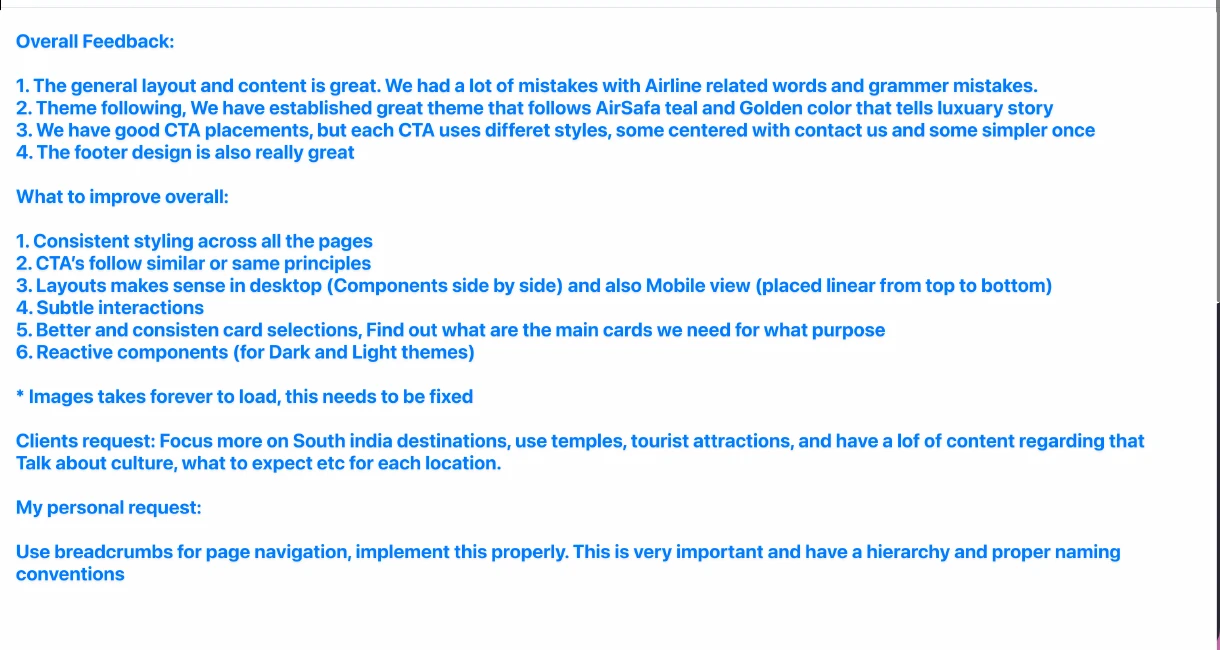
The Git history records the response. Fixes between August 16 and August 21 covered the header, regional layouts, the Airsafa story, the expert and aviation pages, private and tailored services, imagery, mobile navigation and the globe. Later changes corrected aircraft details, added more regional pages, introduced the editorial system and moved the deployment to Cloudflare.
One proposed section deserves special mention. An early company timeline included milestones about approvals, fleet acquisition and operations. The client asked to remove it and rework it later. We took it out.
That was the right decision. In aviation, a polished interface cannot make an unverified operational claim safe. A better content process would have separated confirmed history, intended plans and regulatory milestones before the section reached implementation. We now treat that distinction as part of the design, not a final copy check.
Regional pages grew from direct client feedback
The regional journey system began as a way to explain the places Airsafa hoped to connect. The client wanted the South India material to go further. Generic destination cards were not enough. The page needed temples, tourist sites, regional context and a stronger sense of what travellers might experience in each location.
That request changed both the amount of content and its structure. The finished journey section grouped Southern destinations, regional hubs and location-specific imagery. East, North and West India pages followed later as the content system expanded.
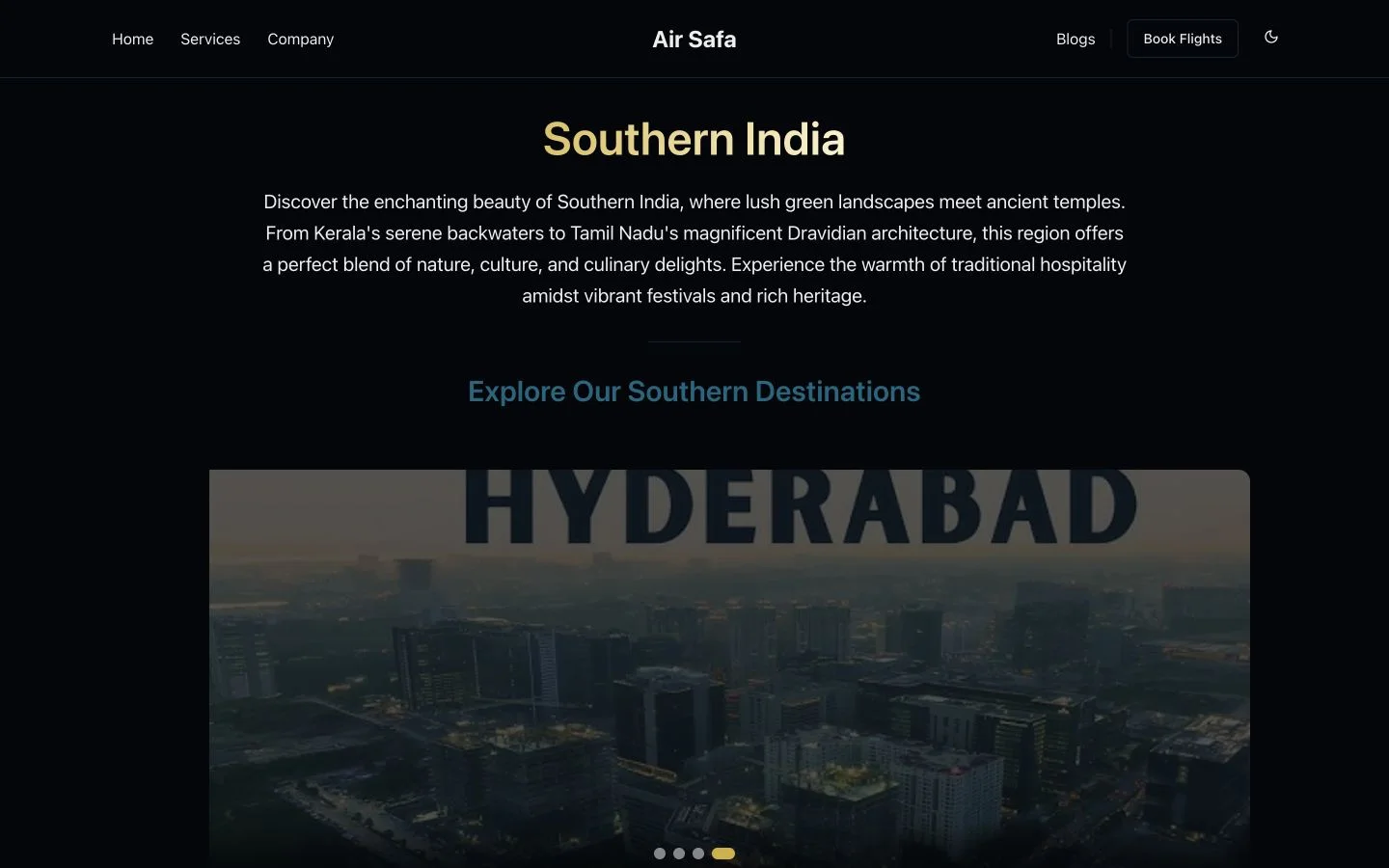
The page did not prove that these routes were live. Its job was to make the regional proposition understandable and give the marketing team material they could use while the operational plan continued to develop.
Each page had to answer a different trust question
The site grew beyond the homepage because Airsafa’s audiences needed different evidence.
The company story explained the mission, leadership and values behind the venture. The expert and aviation pages made the people and training direction visible. Service pages separated regional journeys, charter work, tailored experiences and aircraft information. Contact information gave partners and candidates a direct point of reference.
We were careful not to turn the public case study into an inventory of those pages. The more useful pattern is the question each one answered:
- Who is behind this company?
- What business already exists?
- What is being prepared for the future?
- Which regions and use cases matter?
- Where can a partner, writer or candidate learn more?
That structure helped the website support the meetings already taking place. The client could put airsafa.in on a business card and know that the next step in the conversation existed.
Publishing gave the company a reason to return
The first launch gave Airsafa a public home. The later editorial system gave the site a way to grow.
We introduced a managed publishing workflow for aviation and travel articles, with featured content, categories, authors, reading time, related articles and search-oriented page structure. The public collection eventually included pieces on regional connectivity, South and North India travel, business aviation, leasing and integrated aviation hubs.
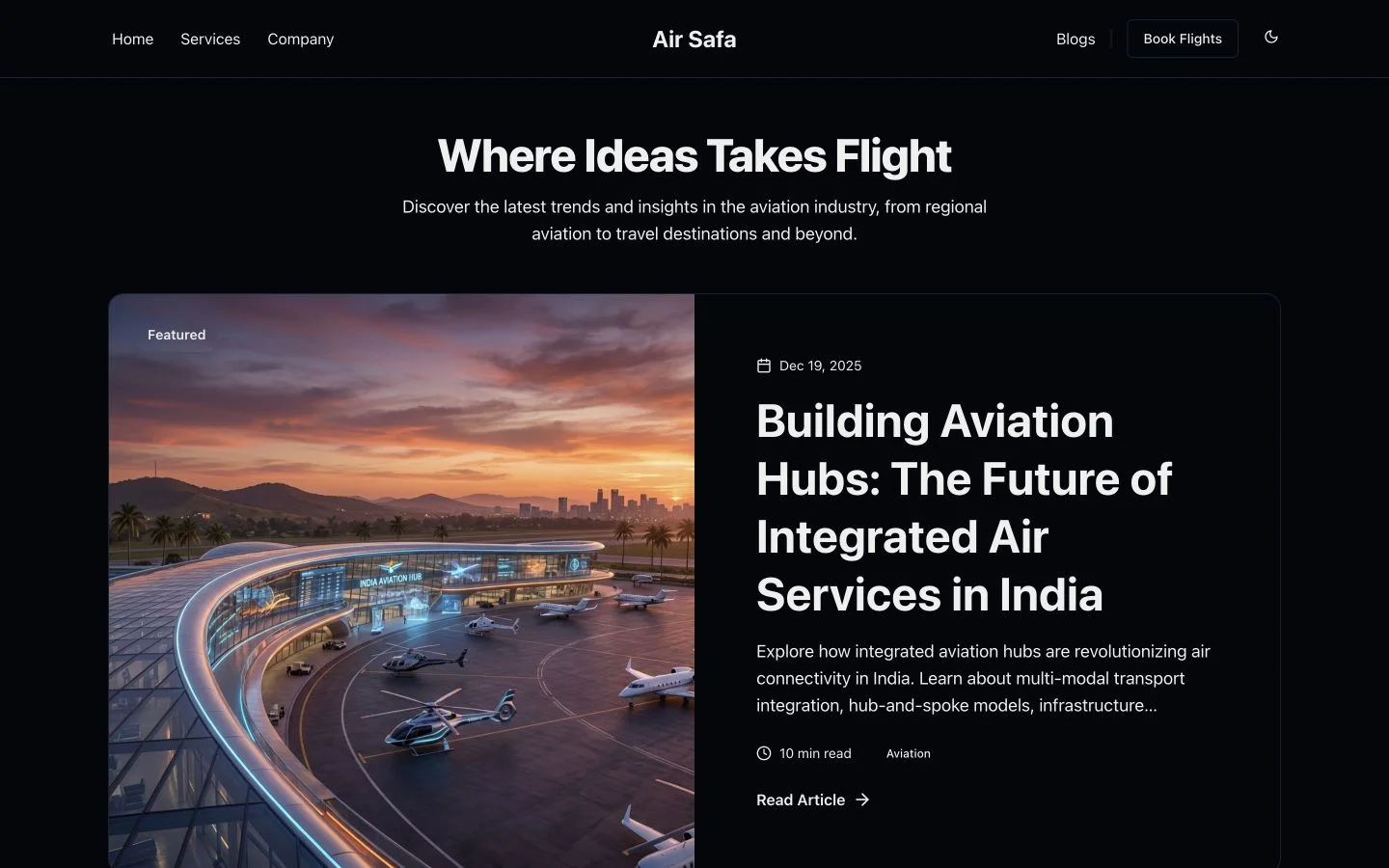
This mattered for two reasons. It gave Airsafa’s team a place to organise public information in more depth than a social post. It also gave search engines more structured material to index over time.
We do not claim that publishing alone produced a specific ranking. Search visibility depends on the query, competition, technical health, links and the quality of the content. Murugaperumal later reported seeing the site at the top of Google results within two to three months, but we no longer have the query-level Search Console record needed to present that as an independently verified ranking benchmark.
What one live analytics snapshot tells us
Analytics were added after the initial release. One client-approved seven-day snapshot captured live combined traffic between December 18 and December 25. It recorded:
- 125 visitors
- 143 visits
- 483 page views
- A 45 percent bounce rate
- An average visit duration of 1 minute 35 seconds
Google was the largest listed referrer, with 87 visitors in the source table. Instagram, Bing and Facebook also appeared. The page breakdown showed activity beyond the homepage, including the Expert, Services, About, Blog, Our Flights, Aviation and Contact pages.
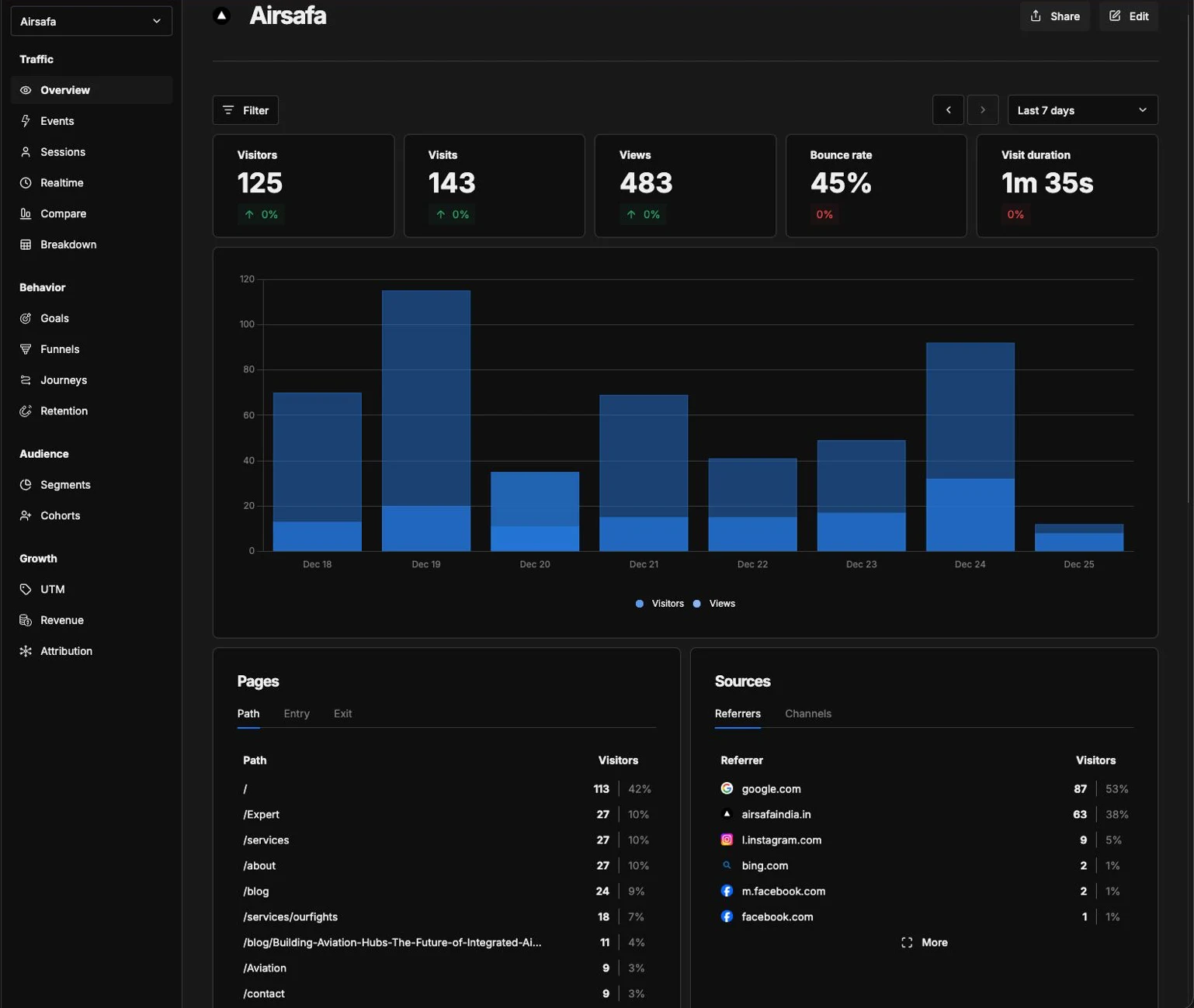
The snapshot is modest, and that is precisely why it is useful. Airsafa was still preparing for public airline operations. The website did not need consumer-airline scale to do its immediate job. It needed the right people to find a coherent public account of the company and continue exploring.
Coverage grew alongside the public story
Airsafa’s work attracted aviation and travel coverage before and after the website launch.
The 2020 H125 report established the leasing side of the business years before our engagement. In September 2025, Mathrubhumi and the South Asia Travel Journal reported on Airsafa’s NOC process and its proposed aviation hub in Trichy. The latter described plans covering training, maintenance, operations and digital aviation services.
We saw writers use information that was also present across Airsafa’s public website and social communication. We cannot isolate the website as the sole source for each article. Company statements and LinkedIn posts also contributed. The defensible outcome is narrower: Airsafa now had a stable public destination that journalists, partners and candidates could consult as interest grew.
The work after delivery mattered to the client
The client did not judge the engagement only by the launch date.
After the domain went live, we continued to revise information, correlate content across pages, send analytics updates and keep the site current. We also advised the internal technical team working on separate booking, HR and operational platforms. Those products were not part of our website build, so we describe our role as consultation rather than delivery.
The infrastructure changed as the project matured. Railway was useful during rapid development. Later, we configured the site as a static export and moved delivery to Cloudflare for stronger caching and a simpler content-serving path. We compressed a large background video from roughly 33.6 MB to 8.0 MB, updated dependencies in response to a published security issue, and kept the production build healthy as new pages and articles were added.
Murugaperumal described that continued ownership in the same testimonial:
Even after delivering, they continued to take ownership and update us with analytics, update information, correlate content and keep our site up to date. We were thrilled to see our site at the top of Google search results in two to three months. I am very happy with their dedication and effort.
Murugaperumal K, Managing Director, Air Safa India Pvt Ltd. Lightly edited for grammar and clarity.
In the accompanying feedback form, he rated the experience 9 out of 10 and explicitly approved the use of his full name and company.
What changed for Airsafa
The engagement produced concrete outputs:
- A complete public website and connected domain in two weeks
- A modern brand expression built from Airsafa’s existing identity
- Dark, light and mobile experiences around a custom animated globe
- Company, team, service and regional content for different stakeholder questions
- A managed editorial system for aviation and travel content
- Analytics and reporting after launch
- Continued hosting, maintenance, content and technical support
| Outcome | Evidence and boundary |
|---|---|
| Airsafa had a public website and connected domain in two weeks | The delivery timeline appears in the project history and Murugaperumal’s approved testimonial. This was a website launch, not the start of public airline operations. |
| Partners, candidates and writers had one maintained public source | The site brought the company story, leadership, services, regional intent and contact information into one place. We cannot isolate the website as the sole source behind later media coverage or business conversations. |
| Visitors explored beyond the homepage | One approved seven-day snapshot recorded 125 visitors, 143 visits and 483 page views across company, service, editorial and contact pages. This was one live window, not a launch baseline or attribution study. |
| The client reported stronger search visibility | Murugaperumal reported seeing the site at the top of Google results within two to three months. We do not have query-level Search Console records to independently verify the ranking. |
| Sparkable remained involved after launch | Later repository work and the client testimonial document analytics, content, hosting and technical support. Sparkable advised on separate booking, HR and operational systems but did not deliver those platforms. |
The outcome was less mechanical.
Airsafa could enter a meeting with a URL on its business card. Partners could look beyond a social post. Candidates could see the people and training direction behind the recruitment activity. Writers had a maintained public source to consult. The leadership team felt that the website matched the seriousness of the conversations it was already having.
That kind of confidence is difficult to reduce to one conversion number. It still matters. In a regulated industry, trust often develops before a transaction is possible.
What we would do better
The two-week schedule proved that a small team could move quickly. It also exposed where speed creates debt.
First, we would establish a structured approval sheet for every aircraft, route, training and regulatory statement before implementation. Airsafa’s plans evolved while the site was being built. A single source that labelled each item as confirmed history, current activity, planned work or private information would have reduced later corrections.
Second, we would define the component system earlier. The August review found inconsistent cards and calls to action because pages grew in parallel under a compressed deadline. The team corrected many of them, but a stricter shared system from the first day would have left more time for content review.
Third, we would install analytics and event tracking at launch. The available snapshot proves that real visitors explored the site, but it cannot compare the new website with a previous baseline or connect a partner conversation to a particular page.
Finally, we would separate presentation forms from operational workflows more clearly. The first release prioritised the public information layer. Some contact and training forms remained front-end interactions rather than fully integrated submission systems. A later phase should connect each form to an owned response process and measure whether enquiries reach the correct team.
These are not reasons to dismiss the speed of the work. They are lessons from it. Fast delivery works best when the team is equally clear about what will be refined after launch.
What came next
As of September 2026, the client reports that Airsafa has hired multiple pilots and cabin crew who are undergoing training. The company has also opened a larger training facility, continues to work through final approvals, and expects test flights before public airline operations begin.
The newer airsafa.aero website is managed by Airsafa’s internal team and serves a different purpose. This case study covers Sparkable’s work on airsafa.in.
Our plans for the next revision are more ambitious than adding more pages. One idea is an interactive 3D cabin experience that can explain seating and onboard choices visually. The content and measurement systems also deserve another pass as Airsafa moves closer to operations.
The most useful lesson from this project is simple. A prelaunch company does not need to pretend it has already arrived. It needs a website that makes its real progress, people and direction easier to trust.
Planning a public launch while parts of the business are still taking shape? See how Sparkable approaches foundation websites, or talk to us about your project.